Although PPE is considered the last line of defense for workers, it can be the difference between a minor injury and a life-altering injury for miners. The dangers of mining pose serious health hazards and an accident can cause loss of limbs or even death. Like any other workplace, employers and managers will need to provide PPE to the worker at no cost to them and ensure the PPE fits well and is maintained.
The following are different pieces of PPE that miners wear to ensure their safety while working in the mine. Remember, miners will need to be protected from head to toe!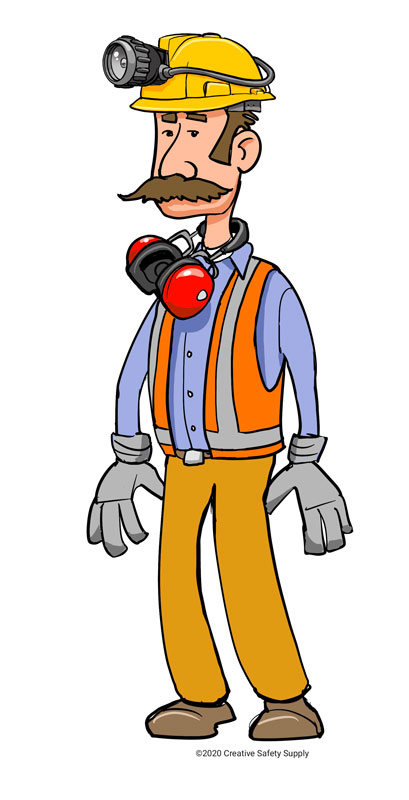
→ Hard Hats: Hard hats are categorized into different types and classes based on the specific hazards present in a mine environment, such as impact, electrical hazards, and weather conditions. Some situations may require miners to wear full-coverage, closed hard hats for protection against water or other elements, while others may benefit from ventilated hard hats to improve comfort in warmer conditions. Lights can be mounted on hard hats to provide working light for the worker.
→ Safety Glasses: Eye protection may sometimes be incorporated with a full respirator, but otherwise glasses or goggles must be provided to workers. Dust and dirt are often floating around the mine and glasses will keep the debris from going into the eye. Safety goggles will keep chemicals from splashing into the eye and should be distributed in mines working with chemicals. If welding or cutting is going on at the mine site, a full face shield may be the ideal choice to protect workers from flying particles or grinding residues.
→ Mask/Respiratory Protection: Dust exposure, especially in coal mining, poses a huge risk to workers. Each workplace will have to be individually evaluated to ensure the proper level of respiratory protection is chosen. In some cases, this may be a nose and mouth cover with replaceable filters, but other environments may call for a powered air-purifying respirator.
→ Hearing Protection: The loud machines, tools, and vehicles miners use on a daily basis combined with the confined spaces of a mine can be a dangerous mixture for workers’ hearing. Ear muffs or ear plugs will need to be provided to keep workers from experiencing irreversible hearing loss.
→ Reflective Clothing: Mines are small, noisy spaces and workers must be able to be seen in these spaces. Workers should be outfitted in reflective jackets or shirts as well as reflective pants. When workers can be easily seen, they are less likely to get struck by vehicles traveling around the mines.
→ Personal Fall Protection Equipment: Falls commonly occur in mines, even those underground! After identifying the different fall hazards in the mine, like an elevator or mining shaft, a personal fall arrest system should be put in place. Fall protection equipment includes an anchor, body support, and connectors.
→ Hand & Foot Protections: Miners should wear durable steel-toed boots when working in a mine. These boots can be different depending on the environment, a boot may need to be waterproof or may need to have a puncture-proof sole. Hand protection is a bit simpler. In most cases, a general safety glove in cotton or leather will work just fine.
In addition to the above PPE, miners may also wear life jackets or belts in areas with a risk of drowning, such as surface mining sites. Moreover, specialized underground mining safety equipment, like self-contained self-rescuers (SCSRs), is often required for underground coal miners.
The Mine Safety and Health Administration (MSHA) mandates that mine operators provide miners with appropriate Personal Protective Equipment (PPE), and this equipment must be carefully selected to match the specific hazards of the work environment. This ensures miners are adequately protected from potential injuries and illnesses.
In addition to carefully selected PPE, employers should also provide other essential mining gear to protect workers, including safety ropes, harnesses, and tools for emergencies. Employers must also ensure all mining safety equipment is properly maintained and that workers are trained on its use and emergency procedures.